this article is titled "case sharing real experience of cambodia's 2g defense server successfully resisting attacks" to sort out the actual record of a network attack and defense that occurred in cambodia. the article focuses on the background of the incident, attack characteristics, technical responses and implementable suggestions, aiming to provide reference protection ideas and operational points for operators and seo concerns in the same region.
this case involves a small and medium-sized internet company that provides local services in cambodia and suffered a targeted traffic and protocol mixed attack. the affected business covers website access and api interfaces. short-term response delays and partial request failures have a significant impact on user experience and business continuity, prompting the security team to quickly assess and initiate established protection processes.
the attack presents the characteristics of traffic spikes and multi-source distribution, including simple udp/icmp flooding and frequent connections targeting the application layer. the duration of the attack is intermittent, accompanied by source address forgery and rate jitter, posing challenges to traditional traffic cleaning and threshold alarms. accurate identification of attack patterns is the key to subsequent response.
the team uses a 2g defense server with inbound cleaning and policy control capabilities as the first line of defense, combined with edge traffic filtering and local rate limiting. this type of deployment has controllable costs during peak traffic periods and can provide effective interception against common flooding and simple protocol abuse. it is a compromise solution suitable for local bandwidth and business scale.
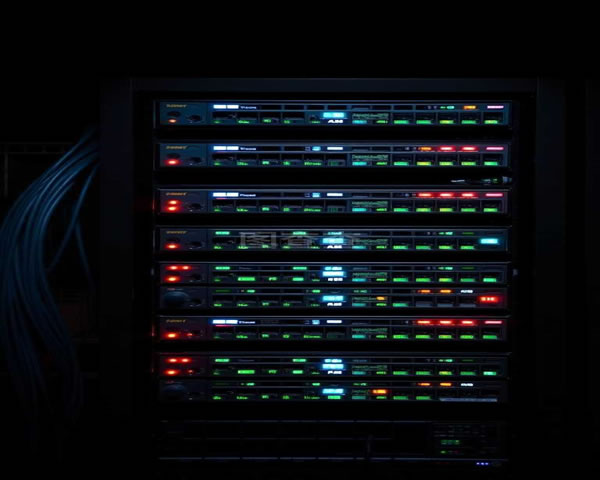
implemented layered protection rules, including black and white lists based on source ip and geographical location, connection number and concurrent session limits, abnormal packet feature matching, and request frequency thresholds for the application layer. reduce misjudgments by refining rules and regularly recall short-term ban strategies to ensure that legitimate traffic will not be disrupted for a long time.
real-time traffic monitoring, netflow sampling and centralized logs are the core for judging the development trend of attacks. the team established alarm thresholds and combined them with a visual dashboard to quickly locate peak time periods and anomaly sources. based on historical logs, the signature database for subsequent rule adjustments is also refined to improve the pertinence and efficiency of protection.
the response process includes three stages: preliminary isolation, rule distribution, parallel playback, and recovery verification. during the isolation phase, priority is given to protecting core services. during the rule issuance phase, a rolling strategy is adopted in batches to observe the impact. during the recovery phase, current restrictions are gradually relaxed and service performance is continuously verified. finally, normal business traffic is restored after stability is ensured.
the key to successfully resisting attacks in this case lies in pre-established processes, layered protection, and log-driven rule adjustments. coupled with the instant traffic cleaning capabilities of the 2g defense server and the rapid response of the localization team, the impact of the attack is limited to a controllable range. these measures are highly replicable for other organizations of the same type.
protection is not a one-time effort and should be combined with regular drills and threat intelligence updates. it is recommended to continuously optimize detection strategies, expand log retention and analysis capabilities, and consider multi-point redundancy and upstream cleaning cooperation when necessary to deal with larger-scale or more complex attack scenarios. at the same time, attention is paid to legitimate traffic whitelist management to reduce the risk of misinterpretation.
through this article "case sharing the real experience of cambodia's 2g defense server successfully resisting attacks", it can be seen that reasonable equipment selection, layered rules and rapid emergency procedures are the key. it is recommended that the localization team, based on its own business scale, gradually establish a log-driven protection system, perform regular drills, and share external intelligence to improve overall resilience and recovery speed.
- Latest articles
- How To Efficiently Communicate With Hostease Hong Kong Server Customer Service To Solve Problems
- Cost Control: Material Selection And Engineering Quantity Estimation Method For Network Cable Routing In German Computer Rooms
- What Qualifications And Network Interconnection Indicators Should You Pay Attention To When Choosing A Hong Kong Service Hosting Computer Room?
- Before Claiming It, You Must Read The Common Hidden Fees And Usage Period Instructions For Hong Kong Server Free Redemption.
- Load Scheduling And Consistency Maintenance Of Taiwan Vps Cn2 High Defense Space In Multi-site Deployment
- Technical Analysis: The Significance Of The Time When The US Military Entered The German Server In Cyber Security Incidents
- Traffic Management Recommendations Teach You How To Optimize Application Communication In A Mobile Card Serverless Environment.
- How To Use Stable And Cheap Malaysian Servers To Ensure Peak Stability During The E-commerce Peak Season
- Interpreting The Stability Factors Of Malaysian Cn2 Server From Hardware To Network Full Stack
- Compliance And Filing South Korea Dial-up Vps20M Cross-border Communication And Legal Compliance Considerations
- Popular tags
-

Analysis Of The Speed And Stability Of Cambodia’s Cn2 Return Server
analyze the speed and stability of cambodia's cn2 return server and provide selection suggestions. -

Comparison And Recommendation Of Server Rental Services In Cambodia
This article provides a detailed comparison and recommendation of Cambodia's server rental services to help you choose the right server rental solution. -

Comparison Of The Advantages Of Cambodia Cn2 Return Server And Vpn
this article compares the advantages of cambodia’s cn2 return server and vpn to help users choose a more suitable network solution.